

power-flow
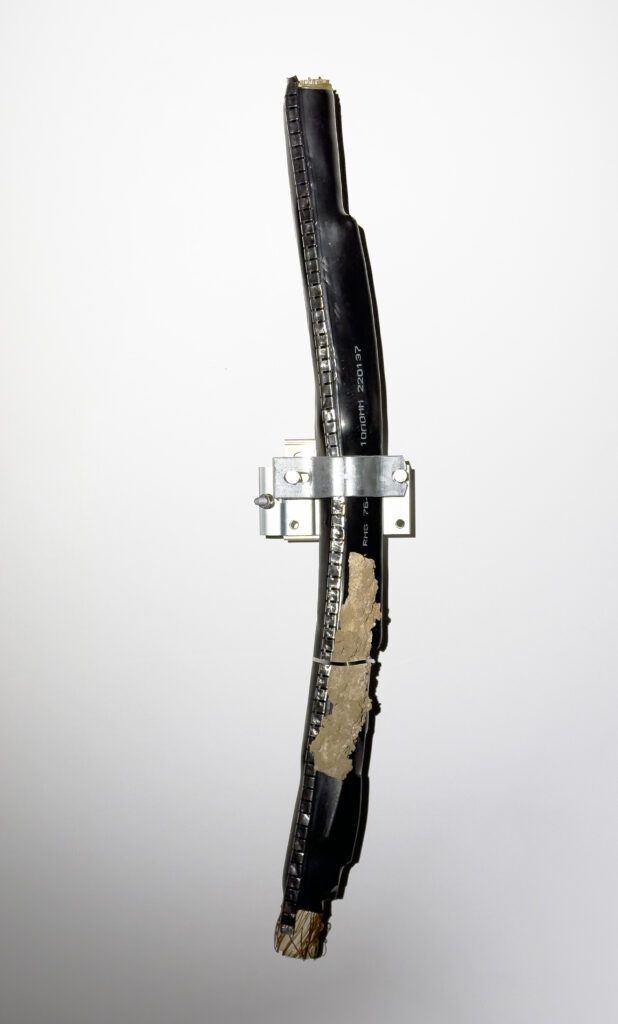
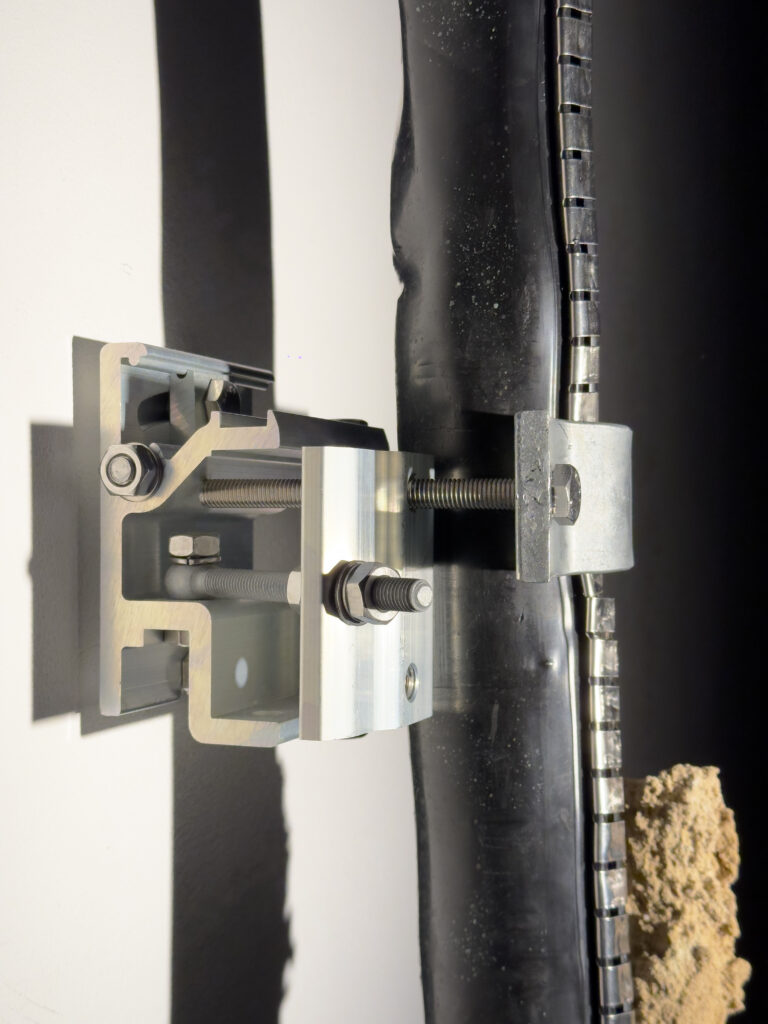
In power-flow, Daniel de Paula traces how energy moves through both natural and engineered systems. The work brings together fulgurite, the vitrified residue of a lightning strike, and fragments of infrastructural submarine data-cable infrastructure. One element is formed by a sudden geological discharge, the other by the continuous circulation of electrical and digital signals beneath the ocean’s surface. Both originate in the transfer of power across distance, in a fraction of a second.
At stake is not only the movement of electricity, but the consequences of transmission. What appears immaterial—a pulse, a signal, a financial exchange—can produce material effects that reverberate globally. Lightning leaves behind a fossilized trace of impact; digital infrastructures leave less visible but no less transformative marks on economies, territories, and bodies.
By foregrounding the physical fragility of submarine cables, thin lines stretched across ocean floors yet foundational to contemporary communication and finance, de Paula exposes the precarious architecture upon which the present world depends. These infrastructures sustain planetary systems of exchange, yet they remain vulnerable to rupture, sabotage, or collapse.
In this sense, power-flow resonates with the uneven ends of worlds. It reflects on how contemporary life is suspended on charged and delicate networks, where interruption is always possible. The work suggests that the end of the world may not arrive as spectacle, but as a severed line, a failed transmission, a sudden silence in the flow of power.
 Daniel de Paula