

At the End(s) of the World: The Ground Is Shifting
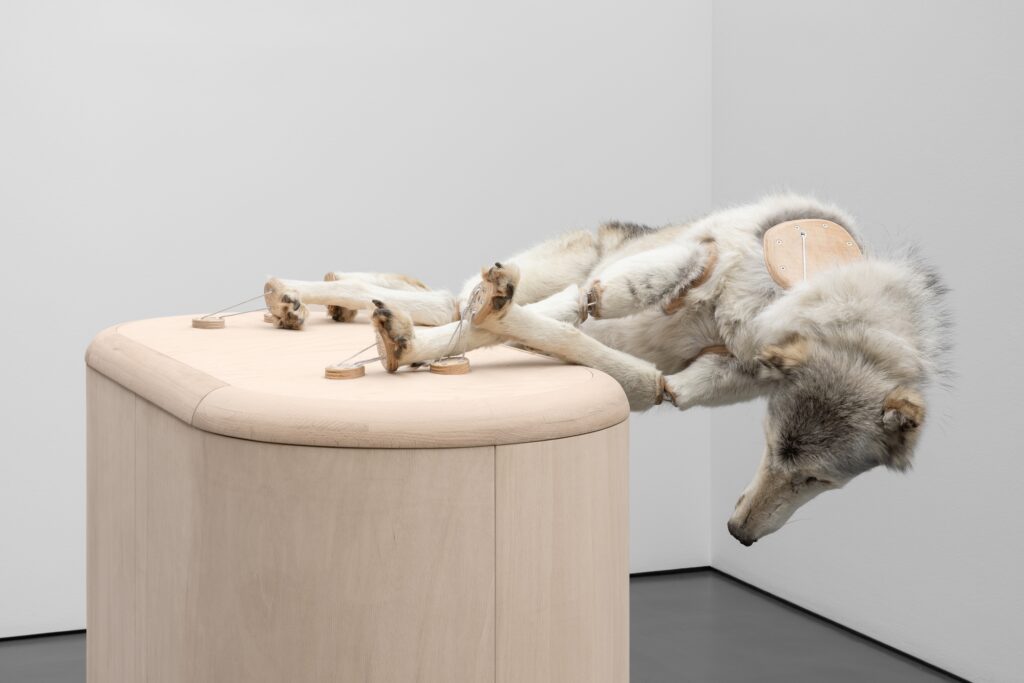



Curator: Yannik Güldner
Artists: Daniel Di Paula, Ginevra Petrozzi, Jamilah Sabur, Julius von Bismarck, Louis Braddock Clarke, Natalia Papaeva, Rä di Martino, Tom K Kemp.
Worlds end unevenly. Languages fall silent, reefs lose colour, commons are fenced, and bodies become disposable. Endings are not universal events but situated ruptures, unfolding differently across geographies, histories, and relations of power. The end of the world is therefore plural and partial, happening repeatedly and often without recognition.
The Ground Is Shifting begins within this unstable zone between exhaustion and emergence. It centres on contemporary forms of environmental extraction and the worlds they hollow, displace, and rearrange. The artists investigate how landscapes are reorganised by global resource economies and how these material operations reverberate through bodies, territories, and ecologies, while also tracing what flickers in their wake: afterlives of matter, gestures of resistance, and fragments of emerging imaginaries.
The exhibition invites you to enter the afterlife of the world. Through dim light and mineral glow, Garage Rotterdam takes on the atmosphere of a cavern. A place where shadows stretch and surfaces absorb. Within this muted terrain, works appear gradually, like constellations surfacing from sediment. Through installations, moving images, and material experiments, fractures and absences become scripts of resistance. And the anomaly – the thing that should not exist becomes the seed of another beginning.
About At the End(s) of the World
A three-part exhibition cycle exploring extraction, planetary instability, and post-collapse imaginaries.
How do we create meaning in a world shaped by ecological, social and political crises? Moving between popular and contemporary ways of understanding, it shows that planetary crisis is shaped not only by physical and economic conditions, but also by cultural imaginaries. Collapse is not a single terminal event – it is a shifting threshold where loss, resistance and new forms of life coexist.
The journey begins with the ground beneath our feet, and expands to planetary ways of sensing, ritual and re-worlding. At the End(s) of the World invites you to imagine ways of living during – and beyond – collapse.