

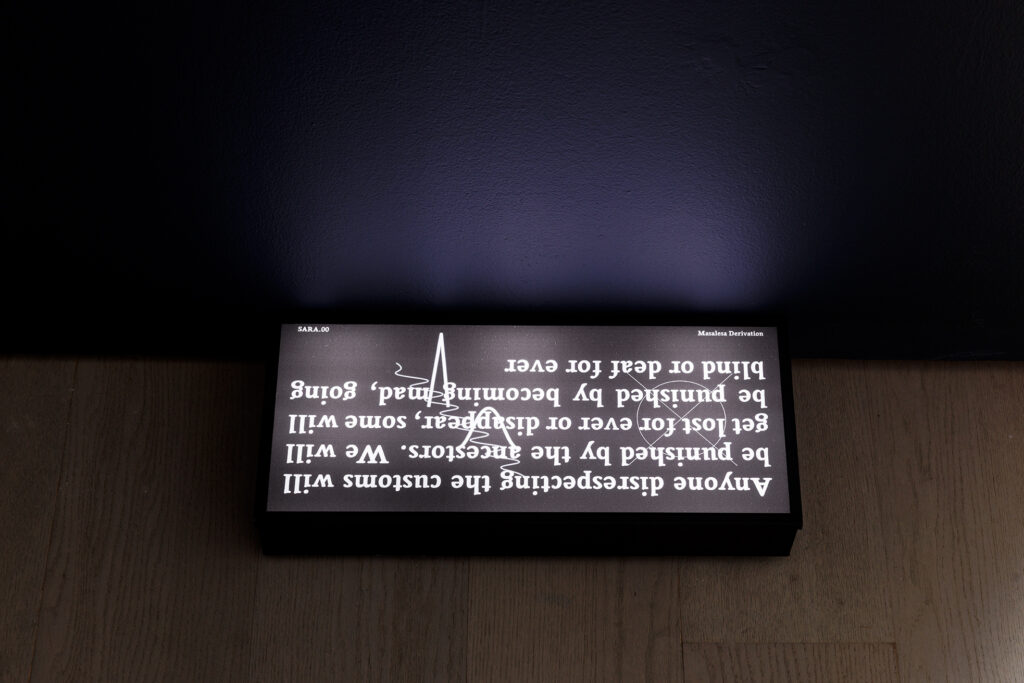
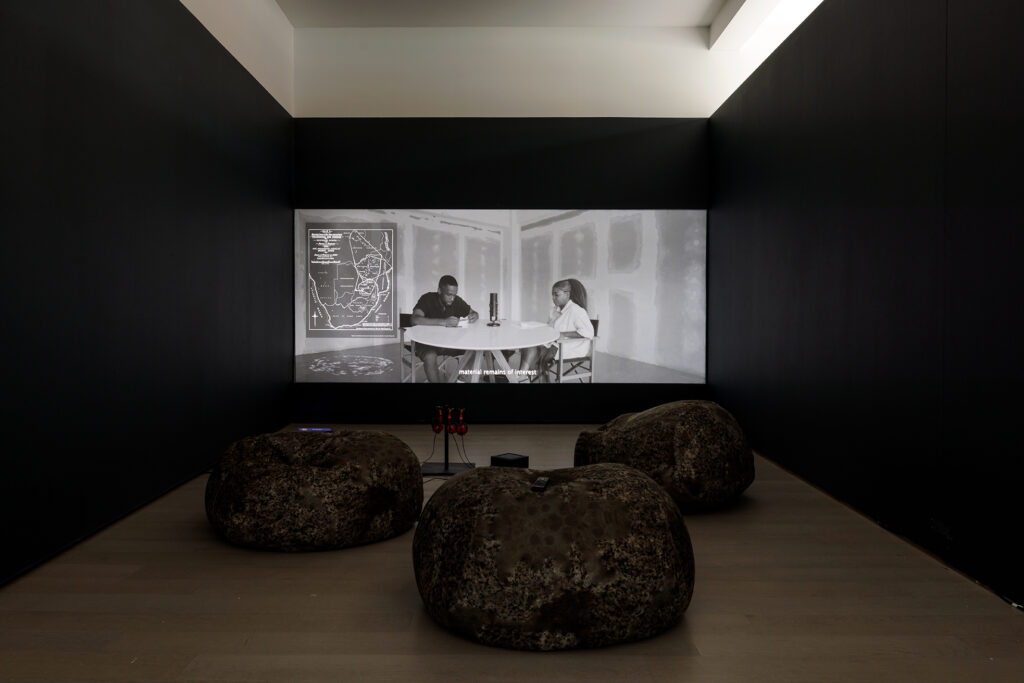
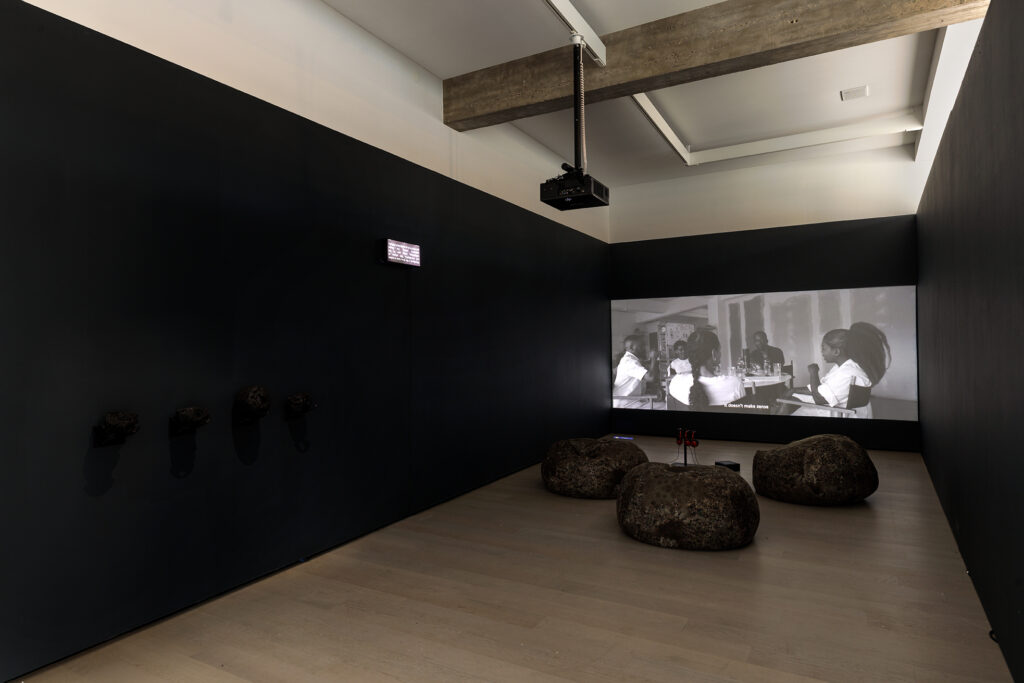
Specifications for a Reverse Archeology (2022.2023)
“Most of what we know about ourselves from a colonial perspective is made up.” This statement concludes Nolan Oswald Dennis’s speculative film Specifications for a Reverse Archaeology. In the work, Dennis explores how colonial forms of knowledge determine what is considered history, and what is lost in the process.
The work takes its starting point in Mapungubwe, South Africa – a precolonial state with a rich material and spiritual history that has been repeatedly excavated, interpreted, and categorized by archaeology. Through their method of “reverse archaeology,” Dennis refuses to treat the past as something that can be extracted from the earth. Instead, Dennis adapts archaeological tools to explore how they might be used differently. A stone with a lens, for example, becomes not an object to be studied, but a means through which to look for oneself. In this way, they reveal how archaeology not only organizes objects but also determines which memories, histories, and forms of knowledge become visible.
Instead of approaching the landscape as something from which something must constantly be extracted, Dennis seeks a different relationship with the place. They focus on restoring relationships with the land, memory, ancestors, and the knowledge embedded within them. Reverse archaeology thus becomes a way to question the violent treatment of land and memory and to make room for other, as-yet-undefined ways of producing knowledge. Matter thereby becomes not only an archive of what has been, but also a carrier of living knowledge and a starting point for a more radical future.
With thanks to the Hartwig Art Foundation.
 Nolan Oswald Dennis