

 Pieter Paul Pothoven
Pieter Paul Pothoven studied at the Gerrit Rietveld Academy in Amsterdam and Parsons New School for Design in New York. He was affiliated as researcher with the Fine Arts Work Center in Provincetown and the Jan van Eyck Academy in Maastricht. In 2016 he is a resident at the Instituto Sacatar in Salvador (BR). In the past he exhibited at, to name a few, FOAM in Amsterdam, Tatjana Pieters in Ghent, Belgium and The Kitchen in New York.
Pieter Paul Pothoven carries out research into historic objects. He changes or recontextualises these objects in installations, text and photography. His aim is to create a new, fresh relationship with the past that is based on a reassessment of the utility value of the objects. For example, he has worked with antique Egyptian mirrors, his grandfather’s prison spoon, houses in Amsterdam where the resistance was organised and a monument to the American east coast that commemorates the first landing of the Mayflower.
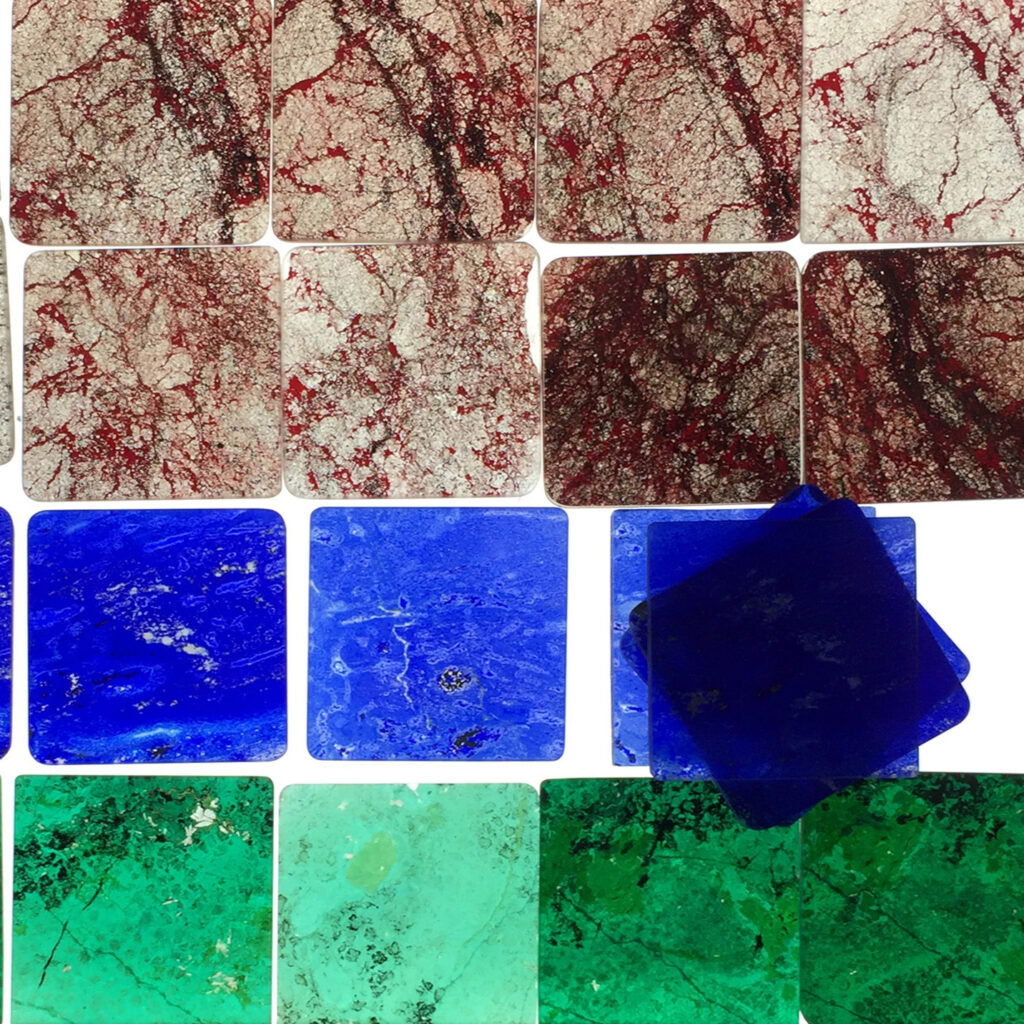
In 2009 Pothoven travelled to the ancient Sar-e-Sang mines in Afghanistan for a long-term study of the lapis lazuli. This rare stone served as the basis for the pigment ultramarine. At the same time, he studied the post-colonial history of the mines. Following the example of the German geologist, Karl Brückl – the first to capture photographic images of this location – Pothoven made the installation ‘Lapis Lazuli from Serr-i-Sang’, which involved him cutting a piece of lapis lazuli from Afghanistan into fragile slides.